
🛡️|Age-Verified Checkout
🚚|Fast UK-Wide Delivery
✅|Genuine, Trusted Brands
📍|Real Store in Airdrie
Understand UK laws for pre-filled pod kits and refillable pod hardware, including capacity limits, age checks, recycling and product notifications.
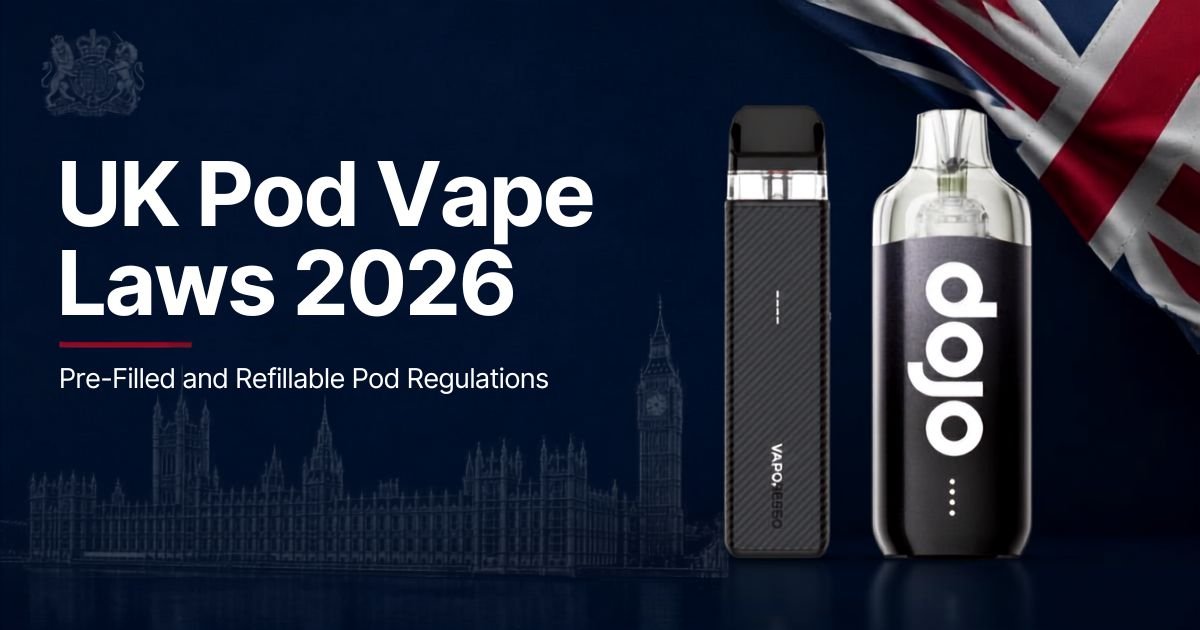
UK pod vape laws set out what pre-filled pod kits and hardware refillable pod kits must meet to be sold legally here. Retailers must also comply with age restrictions, recycling rules, advertising restrictions and product-notification obligations.
A pre-filled pod kit is not automatically a disposable vape. It can be reusable if the battery can be recharged and the pod can be replaced with a separately available pre-filled pod.
A product may be treated as single-use if it cannot be recharged, refilled or reused as required by the applicable rules.
A refillable pod device should:
Retailers should keep supplier documentation explaining how products are reused.
These capacity and nicotine limits are some of the most-checked parts of UK pod vape laws by trading standards, so it’s worth confirming them on every new product line before it goes live, not just at initial supplier onboarding.
For consumer products covered by UK requirements:
These limits apply regardless of whether the customer intends to modify or refill a product.
Applicable nicotine-containing products must be notified before being placed on the GB market. Retailers should check product details and notification information with suppliers via the MHRA’s notification scheme.
Do not rely solely on a wholesaler’s statement that a product is compliant. Retain product records and ask for documentation where needed.
Retailers should have effective procedures to prevent underage sales. From 29 October 2026, the age of sale for vaping and nicotine products will be 18, with additional restrictions affecting supply and promotions.
Online retailers should consider:
Factual information about products may be published on a retailer’s own website, but it must not become misleading or promotional content that breaches the relevant advertising rules.
Avoid:
The ASA also states that nicotine content must be made clear in applicable advertising and that marketing must not encourage non-smokers or non-nicotine users to vape.
Retailers selling pod devices should provide an appropriate take-back route for used devices and vape components. This includes rechargeable hardware, empty pods and used pre-filled pods.
Do not advise customers to put vapes in general waste.
Vaping Products Duty is due to apply from 1 October 2026. Businesses should review HMRC requirements, including whether their products and operations fall within the duty system.
Before listing a pod product, confirm:
This article is general information and not legal advice. See our Age Restriction Notice and Battery & Device Recycling pages for how we apply these UK pod vape laws in practice.